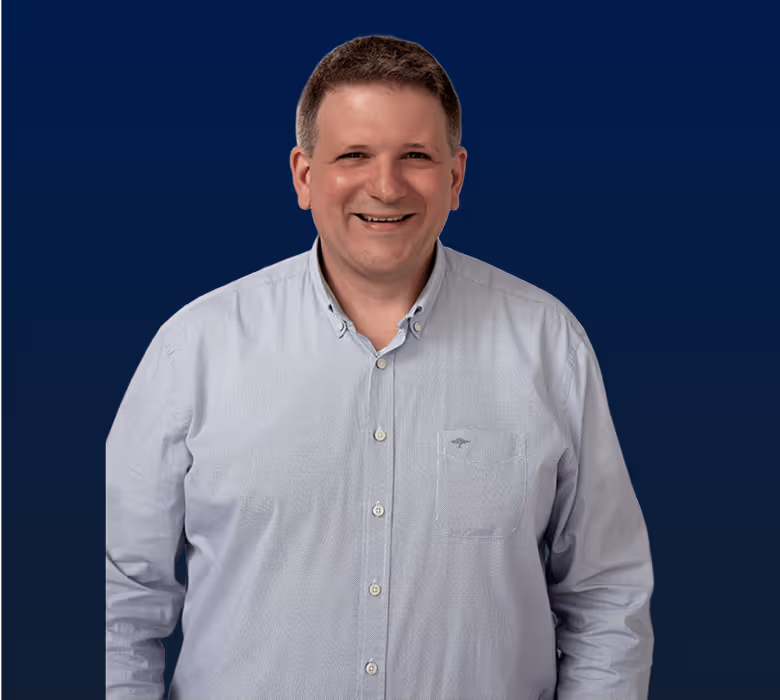


Editorial responsibility

Marc Riegel
Dipl.-Ing. safety engineering · CEO SAFETEE GmbH
- Expert in risk analysis and risk assessment
- Assessor and expert witness for occupational safety and HSE management
- Managing director of SAFETEE since 2013
Forecasts in per cent. Sourced. Released by experts.
Your perspective
The difference
Energy · battery storage by end of 2027
The new grid fee rule for battery storage takes effect by the end of 2027
The SAFETEE Critical Radar is a situation report for Germany on critical infrastructure, energy projects and major construction sites – with forecasts that state a probability, a deadline and a source. A new issue appears weekly, on Fridays.
Forecasts in the radar
Clear statements with a probability and a deadline. Tap a row for the basis.
Permit granted, transformer delivery confirmed with four weeks of buffer; base rate of comparable connections 70 %.
Early warning signs: Transformer delay, objection in the grid area
Three sightings in two weeks; similar clusters elsewhere lasted ten weeks on average.
Early warning signs: New police reports, clustering at weekends
Political pressure is rising, but no draft so far; comparable orders elsewhere took six to nine months.
Early warning signs: Draft in the district council, hearing scheduled
Manufacturer data and tenders show 18–24 months; new capacity in 2028 at the earliest.
Early warning signs: New plants in operation, falling order intake
Long-term average of frost days at the site; three weeks of buffer in the schedule.
Early warning signs: Frost periods above ten days, heavy rain
Existing permits remain valid until end of March 2027; no legislative initiative known.
Early warning signs: Draft bill, change of administrative rules
Complete documents, no objections in the first consultation; base rate in the state 72 %.
Early warning signs: Species-protection objections, staff changes at the authority
Steel prices sideways for six months; futures without upward signal.
Early warning signs: New tariffs, energy price jump
previous issuenowTap a row for the basis and early warning signs.
No example forecast for this filter.
Examples from the anonymised sample order “wind farm repowering”, values fictitious.
What makes it different
Politics · 3 monthsvh-0281
30%
Base rate 6–9 months · deadline 31 Dec 2026
The district issues a general order on drone flights above energy facilities1, 2
¹ Police Saxony-Anhalt, 14 Oct 2026 · checked statement W-0281
² Comparable cases in other districts · base rate
Editorial team · 20 Oct 2026 · reason logged
Situation in Germany
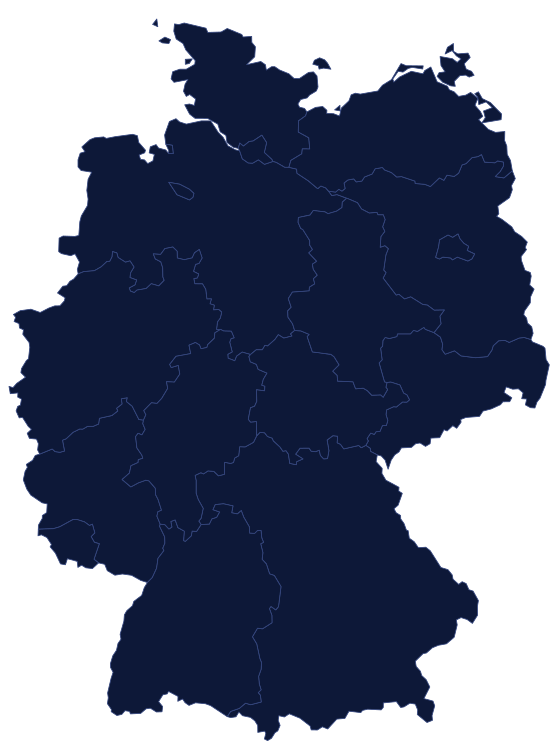
The radar continuously scans police reports, official warnings and grid-operator notices. The editorial team selects the incidents at critical infrastructure that change something and places them, verified, on the map – filterable by state and type.
26 incidents in 14 days · example
Global situation
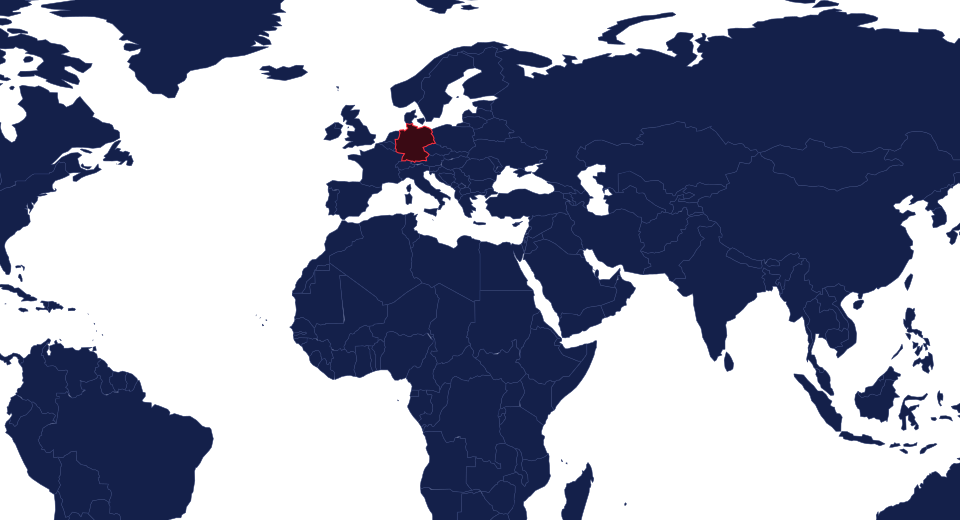
Hotspots and traffic lights: excerpt from a current situation report. Arrow strength simplified. Political systems according to V-Dem (CC BY-SA 4.0).
Sample layout
Fictitious sample. Your PDF is tailored to your project.
CRITICAL RADAR · Situation report
Wind farm repowering, Saxony-Anhalt
Sample layout · Project package
1Situation
2Forecasts
3Impact of the global situation
4Sources
What is on the radar
Selection of sources; licences on the page Sources and licences.
Our principle
Critical Radar is not an archive of reports – it is a situation picture. From thousands of reports, the SAFETEE editorial team selects what changes something for operations, projects and regions, verifies it down to the source and approves it. The result is a reliable situation picture – focused on what matters to you.
From thousands of reports, the editorial team picks what matters to you.
Every statement is checked down to the source.
A named approver decides; nothing essential goes online automatically.
Focused on your company: site · region · industry · your questions.
How we check
Scroll through the seven steps – the example builds up on the left. Nothing essential goes online automatically.
A police report lands in the radar via official feeds. Without a source, nothing goes further.
The editorial team selects from thousands of reports what changes something for operations, projects and regions. Four criteria: impact, proximity, industry, legal or cost consequence.
The scan compares sources, the editorial team confirms: a checked statement with an index number.
The statement becomes an entry in the right section – with traffic light, federal state and area.
From several statements and a base rate, a forecast with a probability and a deadline emerges – footnotes per sentence.
Only a named reviewer, signed in via Microsoft, releases. Every decision with reasons in the log.
After the deadline the forecast is scored. The lesson flows into the calibration of the next forecasts.
Example, fictitious values
Who is behind it
Editorial responsibility
Dipl.-Ing. safety engineering · CEO SAFETEE GmbH
In conversation · Marc RiegelAI-generated scene · SAFETEE situation centre
A situation report for everyone who builds, operates or invests in Germany. We collect incidents, legislation, the global situation and project data and state in per cent how likely the next developments are. Every statement has a source, every forecast is released by a person from the SAFETEE editorial team. In short: not an opinion, but an assessment we can be held to.
We start with the base rate: how often did this happen in comparable cases? Then we add the specific situation, such as permit status, lead times, incidents in the region and politics. Assumptions and early warning signs are shown openly, so everyone can see what the number rests on.
AI helps with collecting and pre-sorting, summarising and translating. It proposes and has to justify every proposal. Only what a named person from the editorial team has released gets published. For me that is not negotiable.
A team from SAFETEE. Jennifer Stöckel, our chief of staff, keeps the Critical Radar together: processes, schedules, customers. Jan Peukmann, our COO, knows our construction sites and what really happens there in HSE management. Björn Andresen, our CSO, is our safety consulting expert and knows what happens inside companies. I carry editorial responsibility.
For companies
SAFETEE sets up a search profile for your project and delivers situation reports, forecasts and a fixed contact.
What is a project?
Which package fits? Five clicks, instant recommendation.
Our recommendation
Projekt
€1,990 per month, net
One project with regular forecasts and an assessment within 2 working days.
Enquire with this recommendationEntry
€990 per month, net
3 individual forecasts per year, followed up
For projects
€1,990 per month, net
6 individual forecasts per year, followed up
Long term
from €4,900 per month, net, on request
By agreement individual forecasts, followed up + AI draft
Fokus, Projekt and Partner start with an initial analysis (€2,850 once, net). Term 12 months. Radar Basis can be booked monthly or yearly.
Radar Basis – read access
€249 per month, net
€599 per month, net
€1,490 per month, net
from €2,900 per month, net – on request
Annual price = 10 monthly instalments · all prices net, businesses only
We send you an offer and invoice. Required fields are marked with *.
Free
Describe your project in a minute. The editorial team sends you the short report as a PDF within 2 working days.
Offers for businesses only, all prices net. Your situation report comes weekly; the public issue of the radar appears on Fridays. Customers work in “My radar”.
We get back to you within two working days. Your enquiry goes to radar@safetee.eu.
Required fields are marked with *.
Questions and answers
As of 28 October 2026
No – by design. Critical Radar is a situation picture, not an archive of reports. The SAFETEE editorial team selects from thousands of reports the incidents and events that change something for operations, projects and regions, verifies them down to the source and approves them. With a company package this selection is focused on your site, region, industry and questions.
The Critical Radar is a situation report by SAFETEE GmbH on critical infrastructure, energy projects and major construction sites in Germany. It combines incidents, legislation, the global situation and project data, states forecasts with a probability and names the source and reviewer of every statement. It appears weekly, on Fridays, in German and English.
For everyone who builds, operates or invests in Germany and has to see early what is shifting: operators of critical infrastructure and energy projects, construction companies and general contractors, project managers, HSE managers and health and safety coordinators, project developers and investors before a market entry or an investment decision.
Each forecast starts from checked statements in the radar's knowledge base and base rates from comparable cases. It names a probability, a deadline, its assumptions and early warning signs. AI runs propose and justify; a named reviewer from the editorial team decides whether a forecast is published. Every sentence of the basis carries a footnote to its source.
After its deadline every forecast is evaluated. What counts is the direction: above 50 % it should come true, below 50 % it should not. A 30 % forecast that does not happen was therefore correct. Results are published as a table, including the misses, and feed a calibration loop that improves later forecasts.
Primarily official and openly licensed sources: warnings from federal authorities, the Federal Network Agency, police press releases, the Bundestag documentation system (DIP), energy market data such as SMARD and ENTSO-E, and the V-Dem index for political systems. Without a source nothing is published; licences are listed on the sources page.
AI researches, pre-checks sources, proposes entries and forecasts and translates into English. It does not publish anything itself. Every proposal must state reasons, including why something should be left out. People check and release, and every decision is logged. Unchecked news ticker items are clearly marked as such.
KRITIS stands for critical infrastructure: facilities such as energy, water, transport or health whose failure would cause considerable disruption. The KRITIS umbrella act, approved by the Bundesrat on 6 March 2026, regulates their physical protection: registration of critical facilities from 17 July 2026 at the earliest, risk analyses, resilience plans and reporting of significant disruptions within 24 hours. This is not legal advice.
A new issue is published weekly, on Fridays. In between, the radar is updated continuously; each issue freezes the state at its release date and is available as a complete PDF with a source index in the archive. All content appears in German and English; the English version is translated with AI and checked by the editorial team.
The radar is currently in internal test operation; access is via a SAFETEE account with Microsoft sign-in (Login, top right). Companies can already request research packages tailored to their project. Public access and customer accounts “My Radar” will follow once licences, prices and legal texts have been finalised.
Three packages for companies, graded by breadth of topics and depth: Fokus with one project (a search profile of sector, project type and region), a weekly report and 3 individual forecasts per year, Projekt with up to three projects, ad hoc reports on a change of situation (response within 2 working days) and 6 individual forecasts per year, and Partner with unlimited projects, a dedicated contact, consulting days included and individual forecasts by agreement. Individual forecasts are tracked continuously until the due date. Fokus, Projekt and Partner start with an initial analysis (€2,850 once, net). Term 12 months. Radar Basis can be booked monthly or yearly. Prices, all net per month: Radar Basis (read access) from €249, Fokus €990, Projekt €1,990; Partner from €4,900 and the Standort tier on request.
Contact
Tell us your sector, project type and region. We will show you what the radar sees for you.
Marc Riegel
Managing Director · editorially responsible
radar@safetee.eu · +49 234 58885-0
SAFETEE GmbH · Wasserstraße 221 · 44799 Bochum